Acknowledge the loss! It’s yours.
Written by: Lakshmi Devi
************
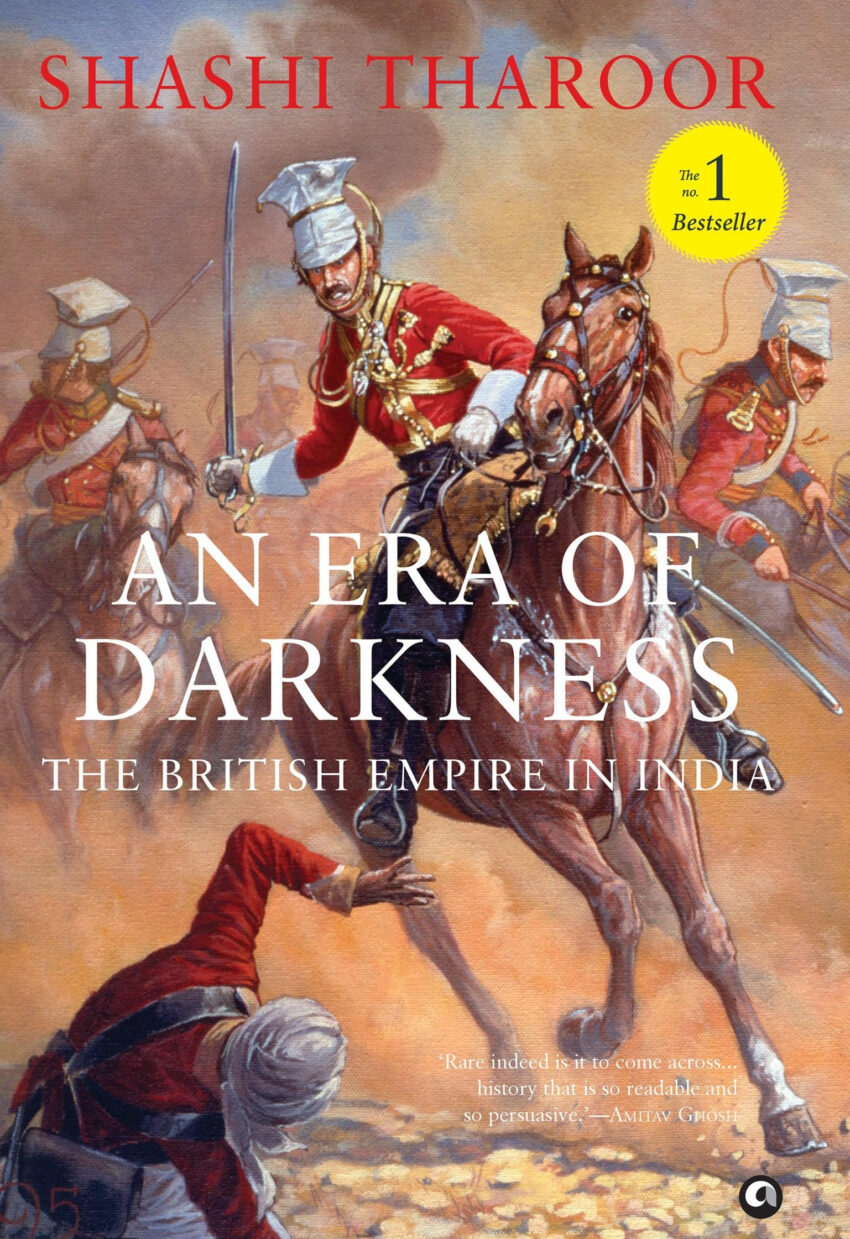
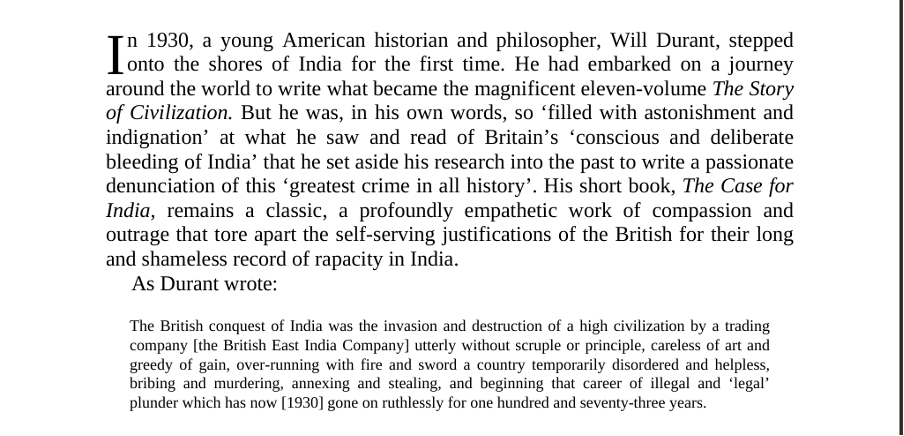
The first paragraph of Shashi Tharoor’s ‘The Era of darkness’ shows briefly what happened back then.
Now, people tend to say that there is no use in reading histories. It is a waste of time. So far, what’s done is done. We can’t live in the past. Let’s move on. Live in the present moment. Blah, blah, blah… Yeah, we are doing the same. The result is here.
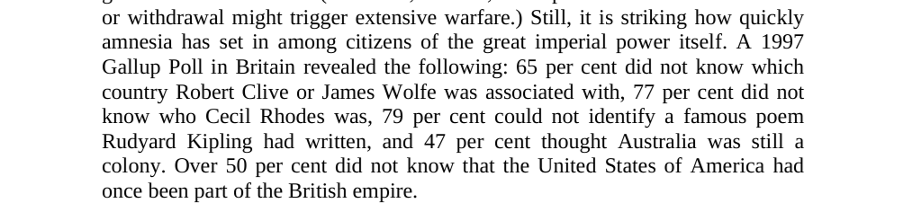
We know that the britishers displaced rulers in India whenever they died without any heir. But do we know that they also seized the land from farmers, which they had been cultivating for generations?
We know that they looted the treasures of kings, queens and nawabs after defeating them. But do we know that they also looted the crops if farmers could not pay the taxes in famines?
Shashi Tharoor gives an account of all these things and more with references to books written by authors from different countries, including England. This work, ‘The Era of darkness’ is neither patriotic nor emotional. There are many recorded facts in it that we want to ignore in our busy lives.

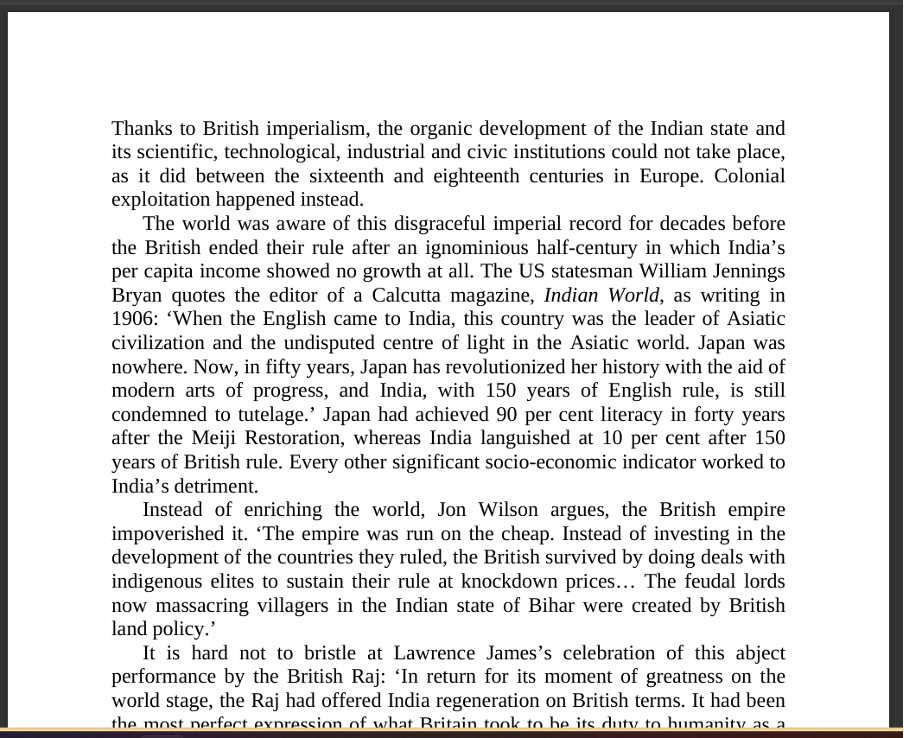
Not only insult, but the injury faced by the Indian economy was very large and cruel in nature. The enormous textile industry suffered like anything. Since the british controlled the ports and government, the imposition of duties and tariffs on industry was done in an unfair manner. They decided the terms according to their business’s interest.
Shashi Tharoor gave a detailed account of statistics about the damage done to industries like textiles, raw materials, artisanry, steel etc. That is completely an economic drain, like the intellectual one these days. Not only money, they looted the self-confidence of our society, they humiliated our ancestors and they broke the whole system, which is a natural feature of this part of the world, for their selfish motives.
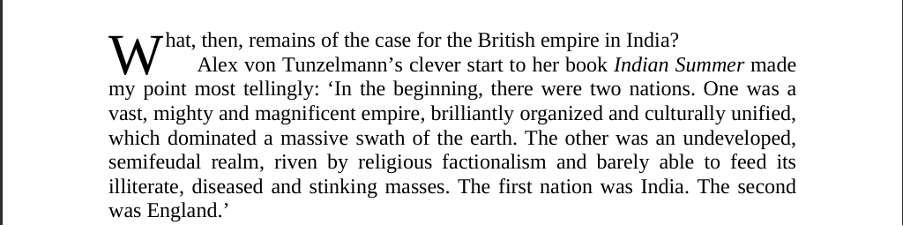
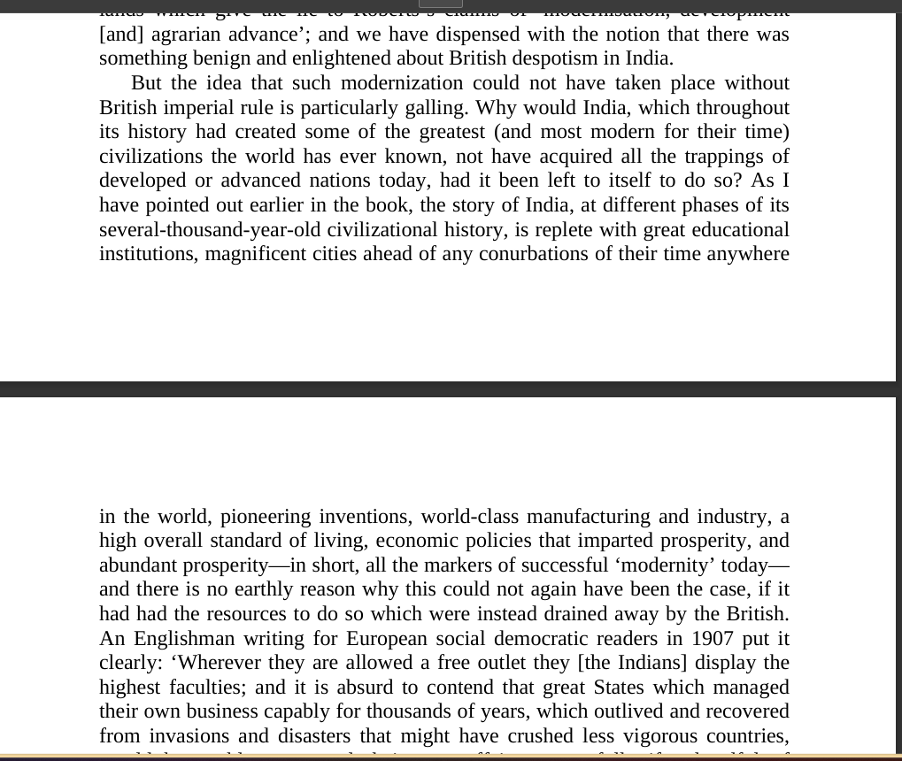
The british apologists, the word Tharoor used to address the so-called supporters of brutal rule, suits them very well. According to them, the british gave us the political unity, a free press, a railway system etc. There is a detailed discussion about all these illusions and many more like them. While he scathed out every deed ruthlessly, there is no emotional outcry that shadowed the clarity of the content. Although his trust and respect towards gandhi-nehru-thoughts of school is firm, it is limited to a tiny part of the whole book.
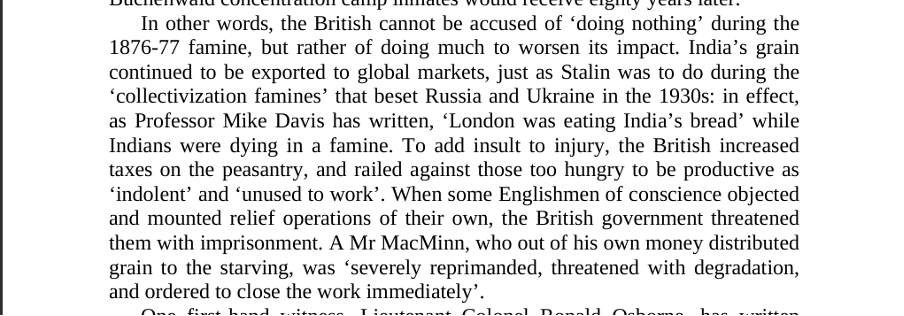
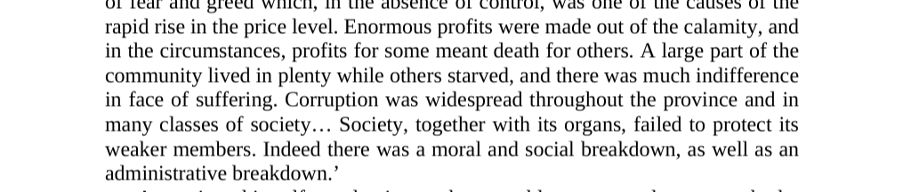
Then comes the description of the british administration, i.e., how they acted and reacted in miserable conditions of famines in those days.
Of course, famines are not new to mankind, but there is a way to deal with them for society and rulers. Especially for Indians, charity is a noble thing and it works indeed. In the past, native rulers took care of the system. For example, they refrained from collecting taxes in that period, did charity work for humans as well as animals and tried to handle the situation as per their limitations. The brutish government mishandled it and their history repeated itself as in other colonies again and again.
All fights for freedom were suppressed with ruthless ferocity. In this book we may have a little understanding about the critical conditions our ancestors faced in life and death for centuries. We have to know and understand in detail about those circumstances. In spite of this situation, they fought and gifted the freedom for us. We have to read, at least read about them.
Alas, what do we read about the freedom struggle in classes? How gandhi and gandhians made protests and how many days they spent in jails. Please know that this (gandhians’) way is a portion of freedom fighting. Our ancestors suffered a lot in day-to-day life, they did fight with brutishers in many ways.
And after that comes, the massacre of Jallianwala bagh. The people killed cruelly there, were not assembled for a fight or protest. A detailed description Shashi Tharoor gave in the book melts hearts.
Many of us modern Indians, including my close friends, praise the british for the political unity they brought in, railways and other things. Shashi Tharoor discussed these illusions and real facts in an elaborate manner. Brutishers’ double standards were illustrated in his words regarding everything from petty feuds to gruesome massacres.
And finally, how the education scenario existed in India before the invasion and how it was destroyed in every possible way by them is worth reading and rethinking about the same.
To conclude this article, I say this is not ‘his’tory; this is our story. I liked the book and wondered how it’s not popular enough. In my opinion it is a must-read for everyone. Shashi Tharoor wrote in simple English. It is a real surprise for me. It’s a well-articulated work dedicated to his children. They have much more interest and knowledge about history, he says proudly. Will the next generation have enough access to historical knowledge? Per se, do we know enough?