Diaspora in Search of Cultural Heritage
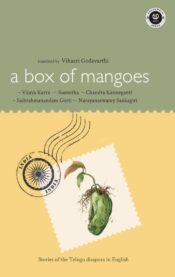
(Introduction to ‘a box of mangoes’ by Vihaari Godavarthi)
Migration is both transformative and paradoxical: it compels families to reimagine themselves in unfamiliar worlds while holding onto the languages, memories, and cultural threads that shaped them. For the children of immigrants, this becomes a lifelong negotiation—between past and present, heritage and adaptation, the intimate world of home and the expansive world outside. As an immigrant, parent, and psychiatrist, I have had a long and deep interest in this phenomenon.
Language lies at the heart of this negotiation. First-generation immigrants must often master a new language for survival and belonging, while their children grow up straddling two linguistic worlds. At home, they encounter their parents’ language; at school and in society, English becomes both necessity and marker of identity. Many families try to safeguard cultural continuity through language and literature, yet the dominance of English can leave most children with only partial fluency in their ancestral tongue. In response to these shifts, diasporic communities often generate their own literature, creating spaces that mediate between cultures and articulate hybrid identities.
‘a box of mangoes’, a translated collection of contemporary Telugu short stories, enters this conversation with clarity and purpose. Vihaari Godavarthi—a member of the second-generation Telugu American community—undertakes the ambitious task of bringing these stories into English. Though rooted in Telugu-American experiences, the stories speak to broader immigrant realities: the quiet negotiations of language, the dissonance between expectation and lived experience, the ache of distance, and the inventive ways individuals adapt, resist, and remember.
Telugu, an ancient Dravidian language spoken by nearly 100 million people, holds a distinguished place in India’s cultural and literary history. Its speakers form one of the largest South Asian linguistic communities in the global diaspora. Telugu immigration to the United States is relatively recent, driven first by shortages of physicians and scientists in the 1960s and 70s and later by the information-technology boom of the Y2K and dot-com eras. As the community has grown, so too have efforts to maintain cultural and linguistic ties through literary magazines, cultural organizations, and digital platforms. The stories in this volume emerge from this fertile and evolving landscape.
Telugu literature is known for its lyricism, social consciousness, and emotional depth. Yet much of this heritage remains inaccessible to English-speaking audiences. Godavarthi’s translations address this gap with a sincerity and skill that belie his youth. Overcoming his own challenges in reading Telugu script, he approaches each piece with humility and care, preserving the rhythms, cultural nuances, and emotional textures of the original works. His translations are fluid and intimate, free from the stiffness that sometimes burdens ethnic literature in translation.
The title, a box of mangoes, carries its own quiet resonance. Though no story bears this name, the mango—beloved across Telugu regions—serves as a potent symbol of home, memory, and sensory attachment. Varieties such as the sweet rasaalu or the fiery aavakaaya pickle evoke an instant nostalgia for many Telugus. A box of mangoes becomes more than fruit; it becomes an emblem of longing, belonging, and cultural continuity.
The stories in this collection reveal a striking thematic range. Paapa celebrates the universal language of affection between an elderly visitor from India and a toddler who shares nothing with him but curiosity and warmth. Igloo captures the quiet struggles, and the resolute resourcefulness of a child uprooted from familiar surroundings, illuminating the psychological complexities of immigrant childhood. Window Shopping challenges the myth of the model minority, tracing how the desire to belong and the lure of the thrill can lead one down dangerous paths, even as the pull of family and culture attempts to anchor the self. Pardon Me, Please, inventive in both form and meaning, explores guilt, compassion, and the fragile architecture of human relationships. And in Hiraeth, a story that stretches beyond realism, the reader encounters a dystopic inhumane future in which the sense of human connectivity reemerges against all odds.
Together, these stories form a mosaic of diasporic experience—tender, turbulent, and richly textured. They demonstrate that immigration cannot be reduced to a single narrative of success or struggle. Instead, it is composed of countless quiet stories: of children deciphering two worlds, of adults navigating loss and reinvention, of families working to preserve cultural memory across linguistic and generational divides.
It is heartening to see a young translator like Godavarthi step into this vital literary space. His work reflects a deep connection to his heritage and a commitment to bringing Telugu stories to wider audiences. In offering these translations, he builds a bridge across languages and cultures, affirming literature as one of the most powerful means of preserving identity and fostering understanding.
Ultimately, a box of mangoes is a testament to the resilience of cultural memory. Like the fruit that lends the book its title—evocative, flavorful, cherished across generations—these stories carry the scent and sweetness of home. They invite readers of all backgrounds to savor, reflect, and recognize themselves within their pages.
It is with admiration and hope that I introduce this collection to you. May it mark the beginning of a long and fruitful literary journey for its young translator, and may it inspire others to bring the rich worlds of Telugu literature to a global audience.
– Chowdary Jampala, MD, Professor of Psychiatry, Rosalind Franklin University of Medicine and Science.
24 November 2025
——————-
A Box of Mangoes
Translation of five Telugu Short Stories by Vihaari Godavarthi
Akshamala Books (akshabooks@gmail.com), 2026
67 pages; Rs.100; $10
————–